
REVIEW · ARMENIA
7 Day Tour through Armenia
Armenia gives you a remarkable amount of history in a small area. In seven days, this tour moves from Yerevan’s Cascade and Armenian brandy to high mountain monasteries, pagan temples, medieval fortresses, and the blue waters of Lake Sevan. The variety is the main draw: each day feels different.
I especially like the mix of major sights and less familiar churches, including the colorful small churches of Ashtarak and the ruined chapel at Harichavank. I also like that the tour includes cultural stops such as the Parajanov Museum and Vernissage Market, not only stone monasteries. The main caution is pace. Several days pack in many stops, and most are scheduled for about an hour.
What makes this seven-day Armenia tour worth considering
- Garni and Geghard in one day: You see Armenia’s best-known pagan temple alongside a monastery cut into rock.
- A full day around Ashtarak: Eight stops bring together churches, a 17th-century bridge, a cathedral, and Amberd Fortress.
- Lake Sevan and Dilijan monasteries: Sevanavank, Haghartsin, and Goshavank show very different settings for Armenian religious architecture.
- More than churches: The Parajanov Museum, Erebuni Museum, Armenian brandy tasting, Gyumri, and Vernissage add art, food, city life, and archaeology.
- A useful all-in-one format: Pickup is offered, the tour is in English, and admission is included at the listed sights.
- A practical price point: At $885.13 per person, the value depends on how much transport, guiding, and admission are covered in the final booking details.
Yerevan begins with views, brandy, and city streets
The first day is a gentle introduction to Yerevan, though it still gives you three distinct experiences. Start at the Cascade Complex, the broad stairway near the Opera House. Seven elevators run inside it, so you do not need to treat the full climb as a test of fitness. The best reason to go up is the view over Yerevan, with the city spread below and, on a clear day, the wider Ararat Valley.
The Cascade also helps you understand Yerevan’s urban character. It is not simply an old monument. It is a major city gathering place, a long architectural axis, and a good first stop for getting your bearings. You have about an hour here, so expect a look rather than a slow, detailed exploration.
Next comes the ARARAT Museum and a tasting of Armenian cognacs at different ages. This is one of the tour’s more distinctive stops. The tasting gives you a direct way to connect Armenia with one of its best-known products, rather than seeing the country only through churches and ruins. If you do not drink alcohol, you may find this hour less useful, but for many people it will be a memorable part of the introduction.
The final stop is Mesrop Mashtots Avenue, where you walk through central Yerevan and look at its architecture. This keeps the first day from becoming a sequence of indoor visits. I like that balance: a city view, a local product, and a street-level look at the capital.
A few more days worth the drive from Yerevan
- The Great Beauty of Armenia: 7-Day Culture and Cuisine Tour
★ 5.0 · 35 reviews - Family package for 7 days
★ 5.0 · 10 reviews - 7 Days Armenia Package with Accommodation, Tours and Transfers
★ 5.0 · 5 reviews
Echmiadzin and Zvartnots connect Armenia’s faith and early architecture
Day two focuses on Armenian religious history. The Holy Archangels Church is described as the main religious and administrative center of the Armenian Apostolic Church. The site also connects to early Christian Armenia, with the tradition that Gregory the Illuminator founded a religious center here on the site of a pagan temple in 303 AD. Saint Hripsime Monastery was built in 618.
The historical dates are important, but the real value of this stop is seeing how Christianity shaped Armenia’s identity over many centuries. An hour is enough for a focused visit, though you will want to listen closely if the guide explains the layers of the site.
Zvartnots Temple provides a different kind of experience. Construction began in the seventh century under Catholicos Nerses III and continued over two decades. The church is now in ruins, but its surviving forms still show the ambition of its design. The name is linked with watchful or vigilant forces, and the site is part of Armenia’s UNESCO-listed heritage.
This is a strong day for anyone interested in architecture and church history. It is less varied than some later days, so you may want to pair it with an unhurried evening in Yerevan.
Lake Sevan, Haghartsin, and Goshavank make the best monastery day
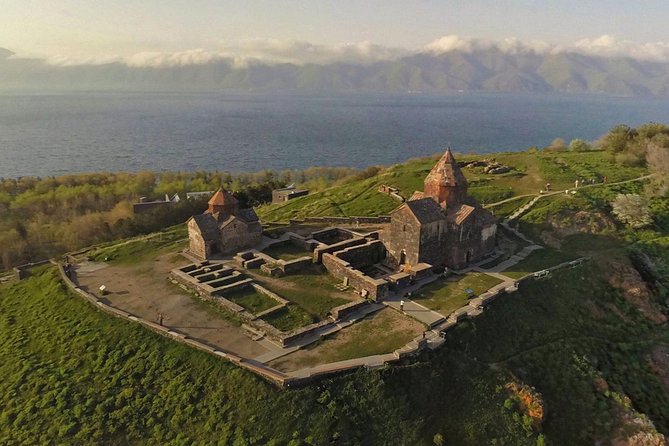
Day three takes you out of the capital and into Armenia’s high country. Lake Sevan is often called Armenia’s pearl, and its clear blue water is the setting for Sevanavank Monastery. The lake is one of the defining natural sights of the country, so this day gives you a useful change of scale after the city visits.
Sevanavank is the main stop, with about an hour to see the monastery and take in the water around it. The setting does much of the work here. You are not looking at an isolated church in a town square. You are seeing a religious complex above a large high-altitude lake, with open views in several directions.
The tour then continues to Haghartsin Monastery in the Dilijan area. Haghartsin served as a religious and educational center in medieval Armenia, especially from the 10th through 13th centuries. Its setting among the wooded surroundings gives it a softer, more secluded feel than Sevanavank.
Goshavank completes the day with another important medieval center. In the 12th and 13th centuries, it became known for scholarship and religious learning under Mkhitar Gosh, an Armenian scholar, legal expert, and scientist. I like the way these three stops work together. Sevanavank gives you the lake, Haghartsin gives you a monastery surrounded by nature, and Goshavank gives you a stronger sense of Armenia’s intellectual life.
The drawback is simple: three monastery visits in one day can blur together if you are not interested in architecture or religious history. Take notes on what differs, such as the setting, stonework, and role of each place.
Gyumri adds streets, stonework, and a reminder of modern history
Day four heads to Gyumri, Armenia’s second city and a major cultural center. The old streets are lined with houses built from colorful stone, with detailed bas-reliefs and distinctive architectural solutions. Some buildings survived the devastating earthquake of 1988, which gives the city a particular emotional weight.
The hour in Gyumri is a walking visit rather than a single monument. That is a good choice. The city’s character comes from its streets, façades, and small details. You can look for the evidence of local craft traditions in the stonework and imagine the older rhythm of carts, workshops, and smiths that shaped the city’s identity.
Marmashen Monastery follows, on the left bank of the Akhurian River. Built between 988 and 1029, it includes five churches and is considered a strong surviving example of the medieval Ani school of Armenian architecture. The river setting should make this a quieter stop than central Gyumri.
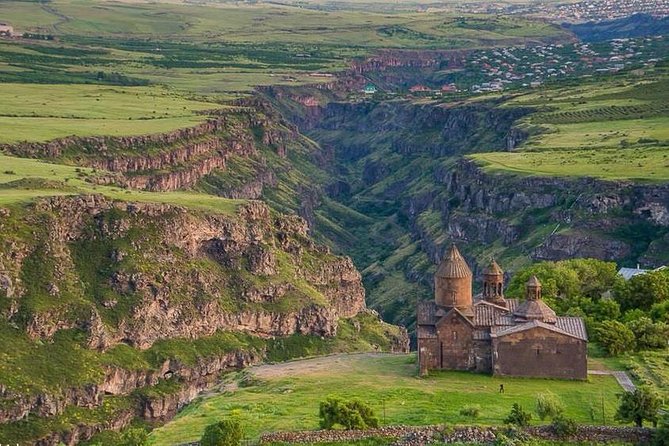
Harichavank is the third visit. The complex lies on the western slope of Mount Aragats, on a rocky point above a canyon. The monastery began in the seventh century, while its main church dates to the 13th century. A small chapel is especially unusual because an earthquake split the rock beneath it from the main cape, leaving the chapel perched above the canyon.
This day is one of the most balanced in the program. You get urban architecture, a monastery by a river, and a dramatic religious site above a gorge. It also asks you to keep moving, so it is not the day for lingering over every carving.
More Tours in Armenia
- Group Tour: Garni, Symphony of Stones, Geghard, Lavash Baking
★ 5.0 · 1,042 reviews - Group Tour: Lake Sevan (Sevanavank), Dilijan (Goshavank, Haghartsin)
★ 5.0 · 1,036 reviews - Group tour: Khor Virap, Noravank, Areni Winery and Cave
★ 5.0 · 651 reviews - Yerevan: Garni, Geghard, Symphony of Stones & Lavash Baking
★ 5.0 · 589 reviews
Garni and Geghard show two very different Armenias
Day five is one of the tour’s strongest pairings. On the way to Garni, you stop at Charents Arch for a view over the Ararat Valley and toward Mount Ararat. The view depends on conditions, but the stop gives you a useful pause before the archaeological sites.
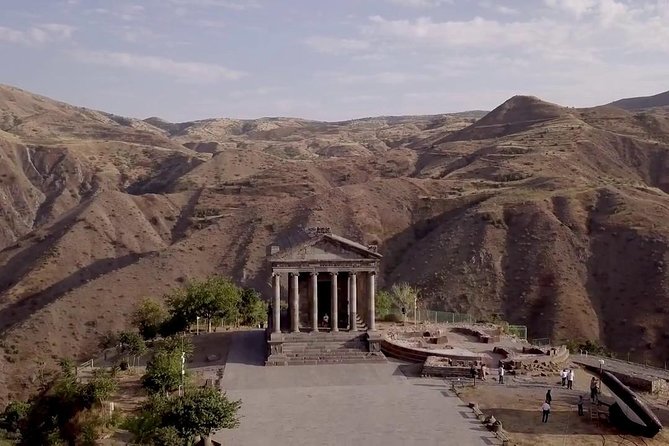
Garni Temple is the only surviving temple in Armenia from the country’s pagan and Hellenistic period. It was dedicated to Mithra, the pagan sun god, and dates to 76 BC. Armenian kings used it as a summer residence for more than four centuries. Its classical design makes it look different from the country’s Christian churches, and that contrast helps explain that Armenia’s story did not begin with Christianity.
You have about an hour at Garni. That is enough to see the temple and understand its position, but not enough for a leisurely archaeological study. If you want clear photographs, allow time to move around the site rather than staying only at the entrance.
Geghard Monastery changes the mood completely. The complex includes buildings and chambers cut into solid rock, with the present structures dating mainly from the 10th through 13th centuries. Its older name was Ayrivank, or Cave Monastery. It later became known as Geghard, meaning lance, linked to the biblical spear once kept there before it was moved to the museum at Echmiadzin Cathedral.
The main church was built in 1215. Avazan Church, from 1283, is carved into the rock and leads through a portico to another chamber deeper inside. Medieval dwellings, caves, and khachkars surround the complex. The stone interiors and unusual acoustics make Geghard a place to slow down and pay attention.
I would treat Garni and Geghard as a single story about Armenia’s past: pagan tradition, royal life, Christian faith, art, and refuge. This is also one of the days most likely to appeal to children because the temple and rock-cut rooms feel very different from one another.
Ashtarak’s colored churches create a detailed eighth-stop day
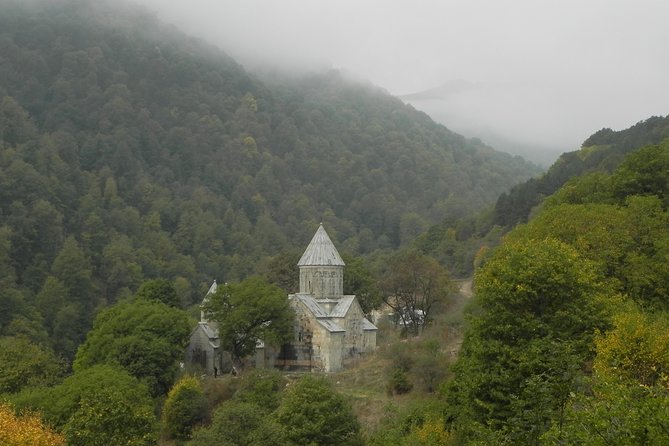
Day six is the busiest day by far, with eight stops. It is best for you if you want depth and variety, but it will feel full. The churches around Ashtarak are often small, partly ruined, and rewarding because they show how Armenian religious buildings vary in age, color, position, and scale.
Tsiranavor Church means apricot-colored church. It is a partly ruined fifth-century building at the edge of a gorge. Karmravor Church means red-colored church and dates to the seventh century. Spitakavor Church of Ashtarak means white-colored church and is a partly ruined 13th-century structure, also near a gorge.
These three stops are especially useful for seeing Armenia’s older village churches without expecting each one to be a grand complex. Their names and colors give you an easy way to remember them. The gorge locations also add a strong sense of place.
The Ashtarak Bridge, built in 1664, crosses the Kasagh River with three arches of unequal size. The area below and around it is used for picnics, so this is a welcome change from church interiors and stone walls.
Saint Gevorg Church was built to hold some remains associated with Saint George, known as the Slayer of Dragons. Inside, 17th-century religious frescoes add color and detail. Saghmosavank Monastery dates to the 13th century and is known for its acoustics. Its name relates to spiritual songs sung by Armenian clergy, so listen for the character of the interior if conditions allow.
At Oshakan, Saint Mesrop Mashtots Cathedral marks the burial place of Mesrop Mashtots, creator of the Armenian alphabet. This is one of the tour’s most meaningful cultural stops because the alphabet is central to Armenian language and identity.
Amberd Fortress finishes the day at about 2,300 meters above sea level, on the slopes of Mount Aragats. Built in the 10th century, it sits where the Arkashen and Amberd rivers meet and served as a stronghold for Armenian kings during wartime. The elevation and exposed position make this a striking final stop, but conditions can affect how comfortable the visit feels.
Parajanov, Erebuni, and Vernissage bring you back to modern Yerevan
The final day returns to the capital and shifts from monasteries to art, archaeology, and local shopping. The Parajanov Museum presents the work of Armenia’s greatest filmmaker through assemblages, flat and three-dimensional collages, drawings, dolls, and film sketches.
This is a good museum for breaking up a history-heavy tour. Parajanov’s work is imaginative and personal, and the displays show how far Armenian visual culture reaches beyond church architecture. You get an hour, so focus on the unusual objects and the way ordinary materials are turned into art.
Erebuni Museum covers the foundation of Yerevan. It sits at the foot of Arin Berd Hill, where the Urartian fortress of Erebouni was built. This stop gives the capital an older beginning than its modern streets suggest and helps place Yerevan within the history of the ancient Urartian kingdom.
Vernissage Market closes the week in a more relaxed way. It is an open-air market where local makers sell handmade works. You can browse for a practical souvenir or simply see the kinds of craft objects sold in the city. Since admission is free, it is also a low-pressure final stop.
Price, group size, and what the package means
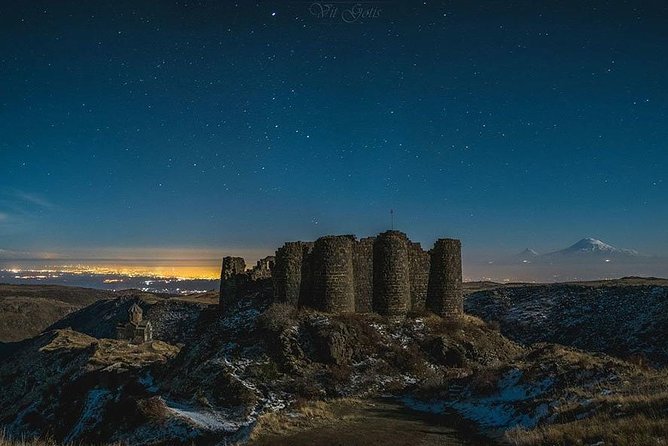
The listed price is $885.13 per person for roughly seven days. The value looks strongest if the package includes the practical work of moving between Yerevan, Gyumri, Lake Sevan, Ashtarak, Garni, Geghard, and Amberd, along with the listed admissions and English-language guidance.
Admission is included at most stops, including the ARARAT Museum and the many churches, monasteries, museums, and fortresses. Cascade and Vernissage are free, but it is useful that they are built into the plan rather than left for you to arrange separately.
Pickup is offered, and public transportation is nearby. The group can reach 30 people, so you should not assume a private, flexible trip. A larger group can make timing and movement slower, especially on the packed sixth day. In exchange, you get a structured route that covers far more of Armenia than most visitors would arrange easily on their own.
The tour is offered in English. The published information does not give guide names, hotel details, meal inclusions, or a precise vehicle plan, so check those points before paying if they matter to you.
Who will enjoy this itinerary most
I would recommend this tour to a first-time visitor who wants a broad introduction to Armenia without building a route from scratch. It suits people who care about church architecture, archaeology, mountain scenery, local art, and national history.
Families can also find plenty to hold their attention, especially at Garni, Geghard, Amberd, the Cascade, and the Parajanov Museum. The limitation is that children may tire during the long series of churches and monasteries. The same is true for anyone who prefers slow travel.
You should also be comfortable with frequent changes of scene and one-hour visits. The tour is designed to show you a lot, not to give you a full afternoon at every site.
Should you book the seven-day Armenia tour?
Book it if you want Armenia’s main sights plus smaller churches, museums, markets, and regional cities in one organized week. The strongest features are the range of places, the Garni and Geghard pairing, the Lake Sevan and Dilijan day, and the unusual Ashtarak route.
Think twice if you dislike group touring, prefer long stays at each monument, or want detailed information about hotels, meals, and transport before booking. At $885.13, the tour offers solid potential value when the included admissions, pickup, guiding, and regional travel match your needs. You can cancel for a full refund up to 24 hours before the start time, which gives you a useful safety margin.
FAQ
Where does the tour begin?
The tour is based in Yerevan, Armenia. Pickup is offered.
How long does the tour last?
The experience lasts approximately seven days.
What language is the tour offered in?
The tour is offered in English.
How much does the tour cost?
The listed price is $885.13 per person.
What is the maximum group size?
The group can include a maximum of 30 people.
Are admission tickets included?
Admission is listed as included for most stops. Cascade Complex and Vernissage Market are listed as free.
Does the tour visit Lake Sevan?
Yes. Day three includes Lake Sevan and Sevanavank Monastery.
Does the itinerary include Garni Temple and Geghard Monastery?
Yes. Both are included on day five, along with a stop at Charents Arch.
Can I cancel for a full refund?
Yes. You can cancel at least 24 hours before the experience start time for a full refund. Cancellations or changes made less than 24 hours before the start time are not accepted for a refund.
Just added in Yerevan
- Wine Trip in Yerevan★ 5.0 · 3 reviews
- Private Yerevan City Tour with museums★ 5.0 · 5 reviews
- Amazing Yerevan★ 5.0 · 7 reviews
- Garni Gorge and Azat Reservoir OFF ROAD Tour & Water Sports★ 5.0 · 6 reviews
- Vayots Dzor Areni Wine Route★ 3.5 · 3 reviews
- Mountaintop Eats★ 5.0 · 7 reviews
- Private tour to Sevan, Dilijan Off-road tour & Horseback riding★ 4.5 · 5 reviews
- Tbilisi transfer with stops in Haghpat, Sanahin to or from Yerevan★ 5.0 · 5 reviews