
REVIEW · GARNI AND GEGHARD TOURS
6 days in Armenia: Garni, Tatev, Echmiadzin, Sanahin, Haghpat
Armenia packs an astonishing amount into six days: a first-century pagan temple, cliffside monasteries, high mountain ruins, the spiritual center at Echmiadzin, and the UNESCO-listed monasteries of Haghpat and Sanahin. This is a private tour for up to three people, so you get a more personal ride than you would on a large coach.
I like the wide range of places covered, especially Garni and Geghard on the opening day and Tatev with its dramatic cable-car ride. I also like the practical setup: hotel pickup, an air-conditioned vehicle, fuel included, and a schedule that reaches corners of Armenia difficult to combine on your own. The trade-off is that six days cover a lot of ground, and food, lunch, several admission fees, and the Tatev ropeway cost extra.
Key points to know before booking
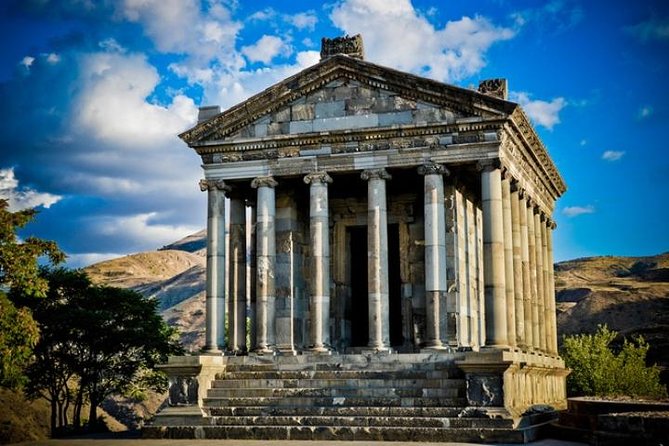
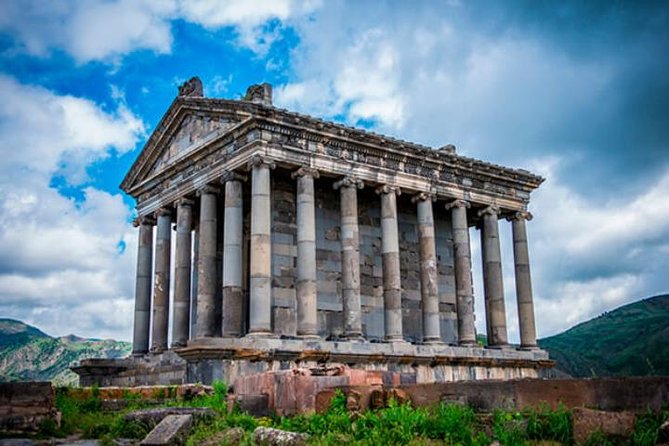
- Garni is Armenia’s rare pagan monument, with classical Greek design and a connection to the ancient sun god Mithra.
- Tatev includes the Wings of Tatev cable car, a 5.7-kilometer ride that is not included in the tour price.
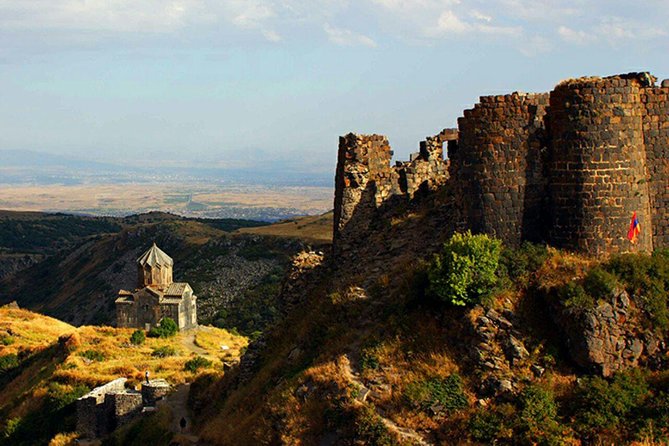
- Day 3 reaches high elevations, including Kari Lake at 3,190 meters and Amberd at 2,300 meters.
- Echmiadzin gives you Armenia’s religious center, with the cathedral, Saint Gayane, Saint Hripsime, and Zvartnots.
- Haghpat and Sanahin are both UNESCO-listed, making the final day especially rewarding for church and architecture fans.
- The $855 price covers the whole private group, not each person, for up to three people.
Why this six-day route works
I like this tour because it does not limit Armenia to one theme. You get pagan architecture, medieval monasteries, Christian pilgrimage sites, royal fortresses, mountain scenery, and the Armenian alphabet. Each day has a different character.
The private format matters. At $855 per group of up to three, the per-person cost is $285 for three people, before meals and extra admission fees. For two people, it works out to $427.50 each. For one person, the value is less compelling, but you still receive private transport and hotel pickup and drop-off.
The schedule is not built around long stays in one place. Most stops last between 30 minutes and two hours. That is enough time to see the main buildings, take in the setting, and hear the basic story, but not enough for a slow study of every carving or church interior. I would choose this trip if your priority is seeing many of Armenia’s major sites in one well-organized sweep.
One useful detail comes from the guide service: Arman handled the first four days for one past participant and was praised for his effort and help. The same account noted that he was quieter on the final day. That is a small reminder that guide style can vary from day to day, but the overall experience was still rated five stars and recommended by all 12 participants represented in the available rating.
More Garni and Geghard trips from Yerevan
- Group Tour: Garni, Symphony of Stones, Geghard, Lavash Baking
★ 5.0 · 1,042 reviews - Yerevan: Garni, Geghard, Symphony of Stones & Lavash Baking
★ 5.0 · 589 reviews - Group Tour: Garni pagan temple, Geghard monastery, Lake Sevan, Sevanavank
★ 5.0 · 430 reviews
Day 1: Garni’s columns and Geghard’s caves
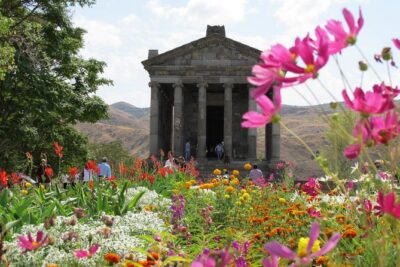
Garni is an excellent first stop because it immediately shows you that Armenia’s past is not only Christian. Built in the first century AD by King Trdat, the temple is dedicated to Mithra, the sun god. Its columns and proportions follow classical Greek architectural rules, giving it a very different look from the churches later in the week.
You have about an hour here. That is enough to appreciate the temple’s shape and its unusual place in Armenian history. The admission fee is not included, so keep that small extra cost in mind.
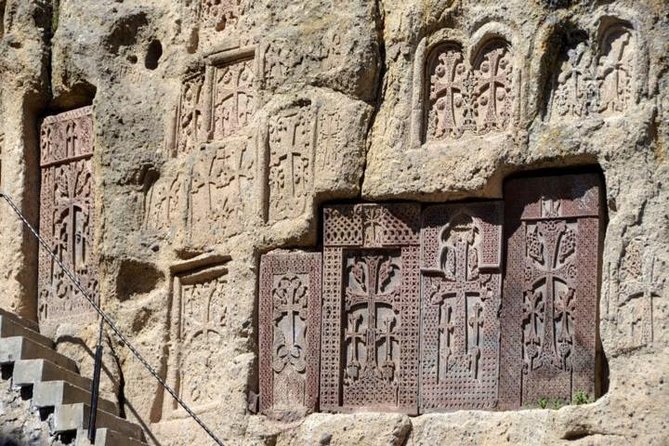
The Monastery of Geghard changes the mood completely. Founded in the fourth century by Gregory the Illuminator, Armenia’s first Catholicos, it began as Airivank, meaning cave monastery. It later took the name Geghard, linked to the spear said to have pierced the body of Jesus Christ.
You get another hour at Geghard, and admission is free. The site’s identity comes from its rock-cut spaces and its long connection with early Armenian Christianity. I would pay attention to the contrast between Garni’s open classical form and Geghard’s stone-cut religious setting. Together, they make a strong introduction to the country.
Day 2: Noravank, Tatev, and the Wings of Tatev
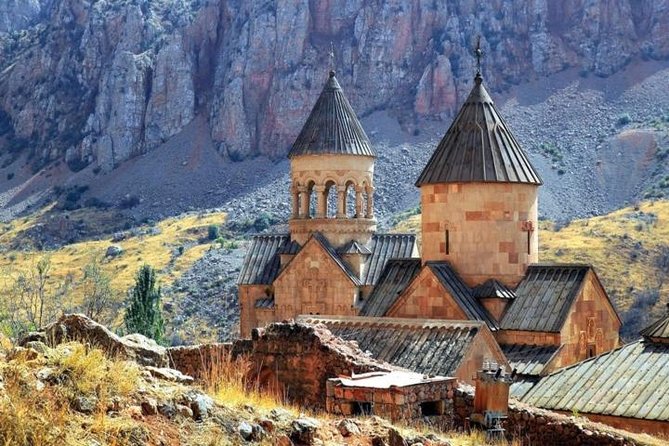
Day 2 brings two major monasteries and one of Armenia’s most memorable rides. Noravank dates from the 13th and 14th centuries and includes the church of Saint Astvatsatsin, Saint Stepanos and its gavit, Saint Grigor Church, burial structures, chapels, and other medieval remains.
The planned stop is one hour, with free admission. Noravank is a good place to look beyond the main façade. The complex includes religious, funerary, and residential parts, so you can get a better sense of how a medieval monastery functioned rather than treating it as a single church.
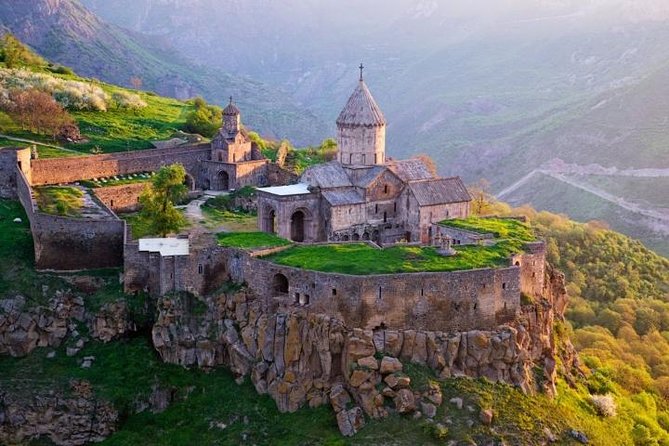
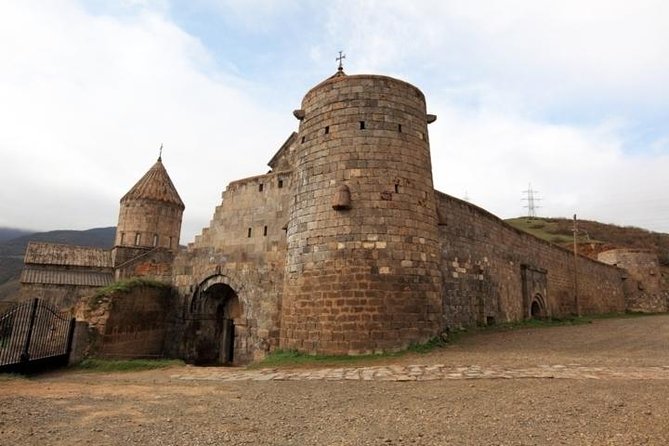
Tatev receives two hours, the longest stop of the day. Built between the ninth and 13th centuries, the monastery occupies a high position where the stone walls seem to continue the rock beneath them. The old Armenian meaning of Tatev is give wings, a fitting name for a monastery perched above the surrounding terrain.
Then comes the Wings of Tatev cable car, with 30 minutes assigned for the experience. At 5.7 kilometers, it is described as the longest cable car in the world. The ride is not included, so check the ropeway price before you go and budget separately for it.
I see Tatev as one of the tour’s major payoffs, but the extra ticket is important. If you are trying to keep costs exact, this is one of the clearest additions beyond the $855 group price. If you enjoy high viewpoints and unusual transport, it is likely worth considering.
Day 3: High-altitude Armenia at Kari Lake and Amberd
Day 3 heads into the Mount Aragats area. Kari Lake sits at 3,190 meters above sea level and has a perimeter of about 1,150 meters. It formed from ice, and snow surrounds it much of the time. The water is cold, and the high setting gives this stop a stark character unlike the monasteries.
The visit lasts about 40 minutes and admission is free. The elevation is the key practical point. The tour asks for a moderate level of physical fitness, and anyone sensitive to high places should take the altitude seriously. You do not need to turn this into a strenuous hike based on the information provided, but this is not a lowland sightseeing stop.
The Armenian Alphabet Monument offers a short change of pace. Built in 2005 for the 1,600th anniversary of the Armenian alphabet, it includes sculptures of all 39 letters, made from Armenian tufa. Mesrop Mashtots created the alphabet in 405 so the Bible could be made accessible to Armenians and Christianity could spread.
You have 30 minutes here. The stop works best if you see it as a cultural marker rather than an ancient ruin. Armenia’s alphabet is central to its identity, and the letter sculptures give you a quick visual connection to that tradition.
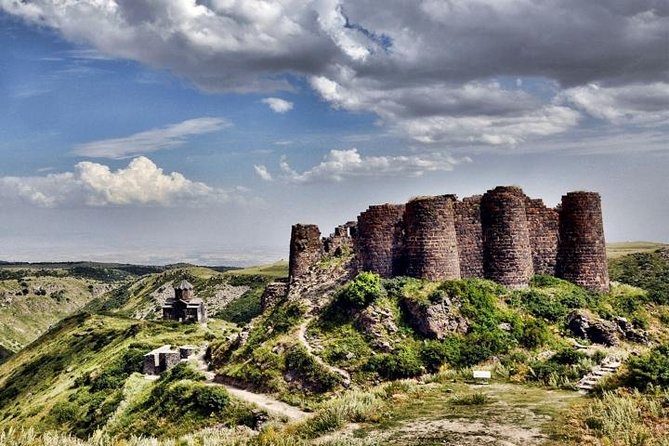
Amberd Fortress closes the day’s main sites. Built in the seventh century at 2,300 meters, its name means fortress in the clouds. The site includes walls, gates, a church, a chapel, baths, and other buildings, all placed where natural defenses helped protect the complex.
The visit lasts an hour. Admission is not included. I like that Amberd adds military architecture to a route otherwise heavy on churches. It also gives the day a clear theme: high places, hard stone, and the ways people used mountain locations for worship and defense.
More Tatev Monastery trips from Yerevan
- Group Tour: Khor Virap, Noravank, Tatev monasteries (wayback on Ropeway)
★ 5.0 · 506 reviews - Tatev & Shaki Waterfall Guided Group Tour with Wine Tasting
★ 5.0 · 266 reviews - Group Tour: Hin Areni Winery, Tatev (wayback on Ropeway), Khndzoresk Caves
★ 5.0 · 192 reviews - Group Tour: Shaki waterfall, Tatev monastery & ropeway, Hin Areni winery
★ 5.0 · 185 reviews
Day 4: Sevanavank and Haghartsin
Sevanavank sits on a narrow rocky peninsula in the northwest part of Lake Sevan. Princess Mariam founded the monastery in 874. You have one hour, and admission is free.
This is a calmer day than the Tatev and Aragats sections. Sevanavank connects Armenian architecture with one of the country’s major lakes, and its peninsula setting gives the visit a strong sense of place. I would use this hour to look at how the monastery relates to the water and rock around it, not only at the church itself.
Haghartsin lies 13 kilometers northeast of Dilijan. Its name means Dance of the Eagles, and the complex was built between the 10th and 13th centuries. You can see khachkars, a sundial on the wall of Saint Gregory, a ruined gavit, and a refectory with an arched ceiling.
The stop lasts an hour and admission is free. Haghartsin is especially useful for anyone interested in the details of Armenian monastic life. The sundial, refectory, burial elements, and carved cross-stones show that these were working communities with practical buildings, not just isolated prayer spaces.
Day 5: Armenia’s spiritual center at Echmiadzin
Day 5 focuses on Vagharshapat, also called Echmiadzin, the religious center of Armenia. Echmiadzin means a place where the only begotten son of God descended. According to tradition, Jesus Christ indicated where a church should be built.
Echmiadzin is the residence of the Supreme Catholicos of All Armenians and the center of the Armenian Apostolic Church. The monastery visit lasts one hour and admission is free. I would treat this as one of the most important cultural stops of the week, even if you are not religious, because it explains the central place of Christianity in Armenian life.
Saint Gayane is a seventh-century church within walking distance of the Echmiadzin Cathedral. Catholicos Ezra I built it in 630, and its design has remained largely unchanged despite later work on the dome and ceilings. The visit lasts 30 minutes.
Saint Hripsime takes another 30 minutes. The current church was completed in 618, replacing an earlier mausoleum connected with the martyred Saint Hripsime. Its classical Armenian design influenced later churches, and the building is part of the UNESCO World Heritage designation for the area.
Zvartnots Temple gives you a final 45-minute stop. Built in the seventh century, it is one of Armenia’s major medieval architectural landmarks. Admission is not included here, unlike the three Echmiadzin-area church stops.
The four sites make Day 5 especially strong for architecture fans. You see a living religious center, two early Armenian churches, and a major temple site. Because the schedule moves through four places, keep your expectations realistic. This is a focused introduction, not a full architectural study.
Day 6: Haghpat, Sanahin, and Odzun
The final day moves to northern Armenia and begins with Haghpat Monastery. Queen Khosrovanush founded it in 976, and the complex includes a narthex, corridor-sepulchers, a refectory, scriptorium, chapel, belfry, tomb chapels, and khachkars.
Haghpat is on the UNESCO World Heritage List, and you have an hour to see it. The range of buildings is the main attraction. A scriptorium points to scholarship and book production, while the refectory and burial structures show the monastery’s wider role.
Sanahin follows with another hour and free admission. It served as an administrative center, a burial place for the Kyurikyan Bagratids, and an episcopal residence until the 11th century. The complex contains three churches, a narthex, scriptorium, belfry, and academy.
Haghpat and Sanahin are both UNESCO-listed, but they are not interchangeable. I like seeing them together because you can compare two major monastic centers and notice how their layouts support worship, study, administration, and memory.
Odzun Church completes the six days. Built around the fifth to seventh centuries, it is an Armenian basilica with arched galleries on its northern and southern sides, a rare feature in Armenian church architecture. Khachkars surround the church, and admission is free.
The stop lasts 40 minutes. It is shorter than Haghpat and Sanahin, but it adds another architectural variation before the tour ends. By this point, you have seen enough churches to notice the differences in floor plans, galleries, carved stones, and surrounding buildings.
What the $855 price really covers
The $855 rate is for a private group of up to three people. It includes hotel pickup and drop-off, transport in an air-conditioned vehicle suited to the group size, and the fuel surcharge.
It does not include food, drinks, lunch, the Tatev ropeway, or certain admission tickets. The listed paid entries are Garni, Amberd, and Zvartnots, as well as the Wings of Tatev cable car. Other listed stops have free admission.
For three people, the price is quite reasonable for six days of private transport across Armenia. For two, it remains a substantial but defensible spend if you value a private vehicle and a fixed route. For one person, I would compare it with shorter private day trips before booking.
Since lunch is not included, you should plan to buy food during the day, though no restaurant schedule is provided. The private format gives your group more control than a large tour, but the supplied details do not promise custom timing or route changes, so ask the provider before booking if that matters to you.
Who should book this tour?
I would choose this tour if you have roughly a week in Armenia and want a broad first visit without arranging six separate day trips. It suits couples, friends, or a small family group that can share the $855 cost.
It is also a good match for anyone who wants more than churches. Garni covers pagan Armenia, Amberd adds a fortress, Kari Lake adds altitude, the alphabet monument adds modern cultural context, and Tatev supplies the route’s big transport experience.
I would think twice if you prefer slow travel, long meals, or several hours at each monument. The schedule is full, and the six-day route reaches both high mountain sites and distant northern monasteries. A moderate fitness level is required, and Day 3 may be the most demanding because of the altitude.
The smart casual dress code is easy to follow, but it matters at active churches and monasteries. Plan for respectful clothing throughout the week.
Should you book it?
Book this tour if you want Armenia’s major sights arranged into one private six-day circuit, especially if three people can share the cost. The strongest parts are the range of places, the private transport, Tatev, Echmiadzin, and the paired UNESCO monasteries of Haghpat and Sanahin.
Before paying, confirm the extra cost of the Tatev ropeway and the included admission tickets, then set aside money for lunches and drinks. If those additions fit your budget, this is a practical way to see a large and varied portion of Armenia in one trip. Free cancellation is available until 24 hours before the experience begins.
FAQ
How long is the tour?
The tour lasts approximately six days.
How many people can join the private tour?
The private tour is for one group of up to three people.
Is hotel pickup included?
Yes. Hotel pickup and drop-off are included.
Is transportation included?
Yes. Transport in an air-conditioned vehicle and the fuel surcharge are included.
Is the Wings of Tatev cable car included?
No. The Tatev ropeway ticket is not included in the tour price.
Are meals included?
No. Food, drinks, and lunch are not included.
What level of fitness is required?
A moderate level of physical fitness is recommended. The route includes high-altitude stops, including Kari Lake at 3,190 meters and Amberd at 2,300 meters.
Haghpat and Sanahin from Yerevan
- Group Tour: Haghpat, Zarni-Parni Caves, Akhtala, Aramyants Castle, Sanahin
★ 5.0 · 283 reviews - Private tour to UNESCO heritage Haghpat and Sanahin monasteries and Odzun church
★ 5.0 · 15 reviews - Armenia. Akhpat, Dilijan, Sevan, cascad Yerevan from Tbilisi
★ 4.7 · 254 reviews
Echmiadzin and Zvartnots from Yerevan
- Group Tour: Echmiadzin Cathedral & churches, Zvartnots Temple
★ 5.0 · 352 reviews - Private Half-day Echmiadzin Cathedral, Hripsime & Zvartnots Temple from Yerevan
★ 5.0 · 95 reviews - Private tour to Echmiadzin (st Cathedral), Zvartnots, Khor Virap, Garni, Geghard
★ 5.0 · 67 reviews - Private 8-9-hour Echmiadzin, Zvartnots, Garni and Geghard trip from Yerevan
★ 5.0 · 62 reviews
Just added in Yerevan
- Amberd (Saghmosavank,Armenian alphbet monument)★ 5.0 · 5 reviews
- Private tour to Khor Virap,Areni winery,Noravank,Tatev Monastery★ 5.0 · 8 reviews
- Private Day Trip to Symphony of Stones-Garni-Geghard & Lake Sevan★ 5.0 · 9 reviews
- Lake Sevan,Sevanavank,Tsakhkadzor(ski resort)★ 5.0 · 9 reviews
- Private Tour to Garni, Geghard and Lake Sevan★ 5.0 · 8 reviews
- Private Tour to Tsaghkadzor city (Ropeway) and Kecharis Monastery★ 5.0 · 8 reviews
- Private wine tour to Khor Virap, Areni winery, Noravank★ 5.0 · 13 reviews
- Tbilisi Yerevan Transfer with English Speaking Driver★ 5.0 · 8 reviews
Garni and Geghard Tours, compared.
Group Tour: Garni, Symphony of Stones, Geghard, Lavash Baking
Read our review →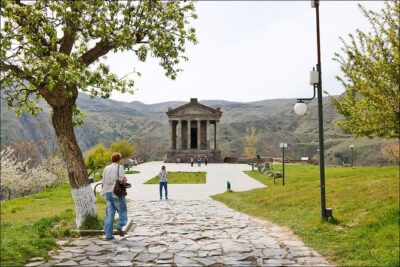
Group Tour: Garni pagan temple, Geghard monastery, Lake Sevan, Sevanavank
Read our review →
Group Tour: Khor Virap, Garni temple, Geghard, Lavash baking
Read our review →
Private 7-8-hour Khor Virap, Garni temple & Geghard monastery trip from Yerevan
Read our review →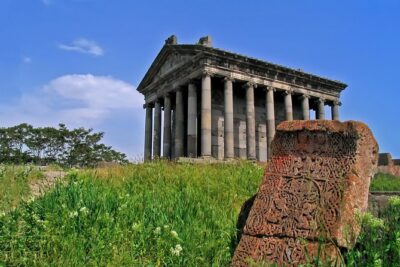
Garni, Geghard & Symphony Small-Group Day Trip with Lavash Baking
Read our review →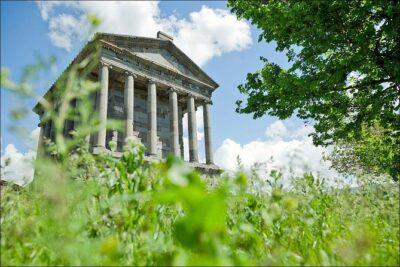
Private Half-Day Garni Temple and Geghard Monastery Tour from Yerevan
Read our review →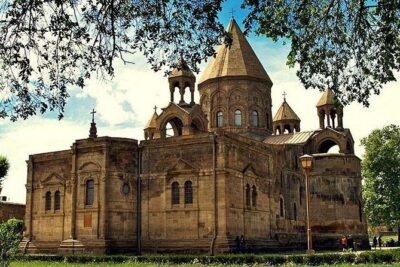
Private tour to Echmiadzin (st Cathedral), Zvartnots, Khor Virap, Garni, Geghard
Read our review →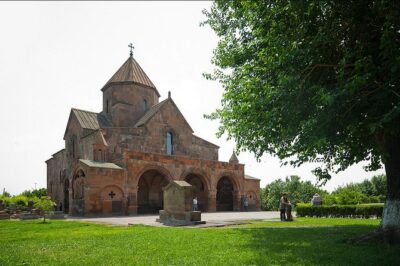
Private 8-9-hour Echmiadzin, Zvartnots, Garni and Geghard trip from Yerevan
Read our review →Browse the lists this tour appears in