
REVIEW · GARNI AND GEGHARD TOURS
Private Tour to Garni Temple, Geghard Monastery, Echmiadzin Cathedral, Zvartnots
The most striking thing about this tour is how much Armenia you see in one day: a pagan temple, a cave monastery, the center of the Armenian Church, and the ruins of a grand seventh-century cathedral. The view toward Mount Ararat from Charents Arch is a smart opening stop, while Geghard and Zvartnots bring very different moods to the day.
I like the private vehicle for up to three people, since you can set the pace instead of following a large group. I also like the mix of sites, especially the contrast between Garni’s classical columns and Geghard’s shadowy rock-cut chapels. The main consideration is time: seven hours is efficient, but the day is full, and entrance fees, lunch, and the Echmiadzin Treasury are extra.
Key points to know before booking
- Seven major stops from Yerevan: You visit Charents Arch, Garni, Geghard, Echmiadzin, Saint Hripsime, Saint Gayane, and Zvartnots in one day.
- A genuinely private format: The price is $105 per group of up to three, not per person, with only your party taking part.
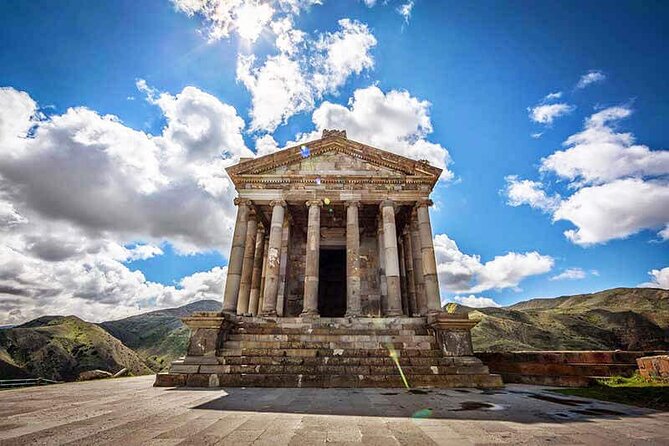
- Garni and Geghard work well together: One is Armenia’s best-preserved pagan temple, the other is a medieval monastery partly carved into rock.
- Echmiadzin adds religious depth: The cathedral, Treasury Museum, and nearby churches show why this town is central to Armenian Christianity.
- A guide is optional: You can add an English or Russian-speaking guide, or take the trip with the professional driver alone.
- Budget for extras: Garni, the Symphony of the Stones, Zvartnots, and the Echmiadzin Treasury Museum are not included in the base price.
Why this private day trip covers Armenia so well
Armenia rewards a well-planned day outside Yerevan. The country’s major sights are not all in one place, and arranging transport between Garni, Geghard, Echmiadzin, and Zvartnots can take work. This tour handles the driving and links them in a sensible route.
The appeal is not just convenience. The stops tell a clear story about Armenia. Garni represents the pre-Christian era. Geghard shows how Christianity took root in mountain monasteries. Echmiadzin is the religious center of the Armenian Apostolic Church. Zvartnots offers the remains of an ambitious cathedral that was destroyed by an earthquake.
You have about seven hours, so expect a steady day rather than a slow one. Most stops last from 30 minutes to one hour. That is enough for photographs, a look around, and some explanation, but not enough for long museum visits or extended walks at every site.
The private setup matters here. With a maximum of three people, you can ask for a little more time at a favorite stop, move on when you have seen enough, or shape the day around your interests. The tour description also allows customization, though you should agree on major changes before departure.
More Garni and Geghard trips from Yerevan
- Group Tour: Garni, Symphony of Stones, Geghard, Lavash Baking
★ 5.0 · 1,042 reviews - Yerevan: Garni, Geghard, Symphony of Stones & Lavash Baking
★ 5.0 · 589 reviews - Group Tour: Garni pagan temple, Geghard monastery, Lake Sevan, Sevanavank
★ 5.0 · 430 reviews
Charents Arch and the first view of Mount Ararat
Charents Arch is a short stop, but it earns its place. From the platform inside the arch, you get a broad view toward Mount Ararat and the surrounding countryside. The arch itself is simple. The view is the point.
I would treat this as a quiet orientation stop rather than a monument that requires a long visit. Thirty minutes is plenty. If the weather is clear, the view can give you an immediate sense of Armenia’s geography and the importance of Ararat in Armenian culture.
This is also a useful place to begin because it breaks up the drive before the main sites. Have your camera ready, but keep your expectations tied to visibility. The appeal of the stop depends heavily on the view.
Garni Temple, Armenia’s surviving pagan monument
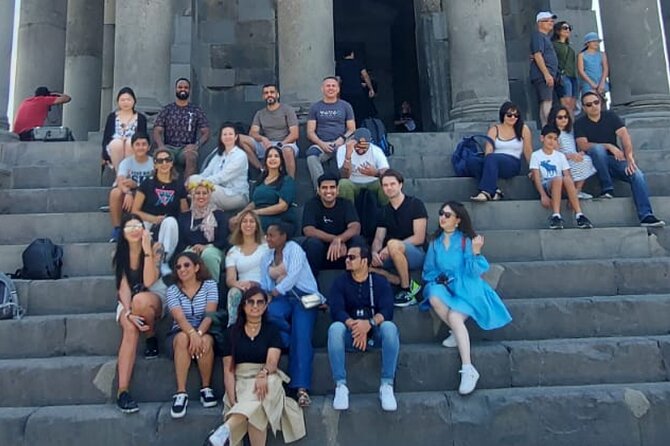
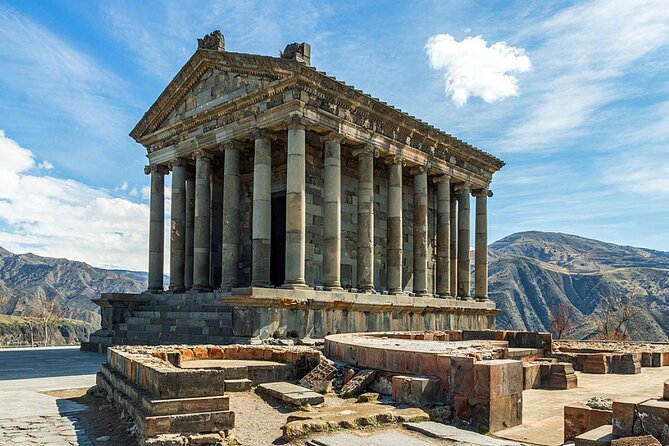
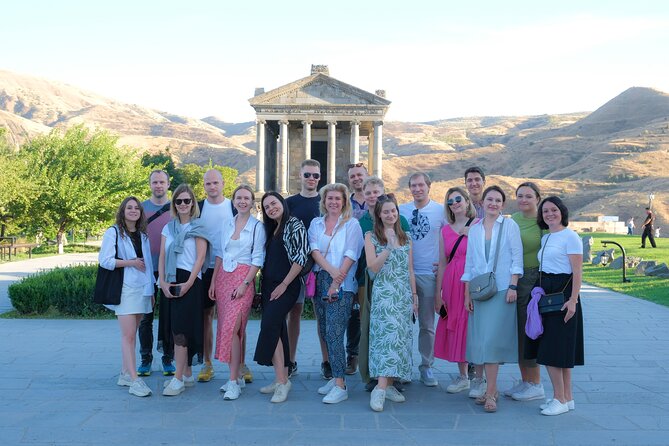
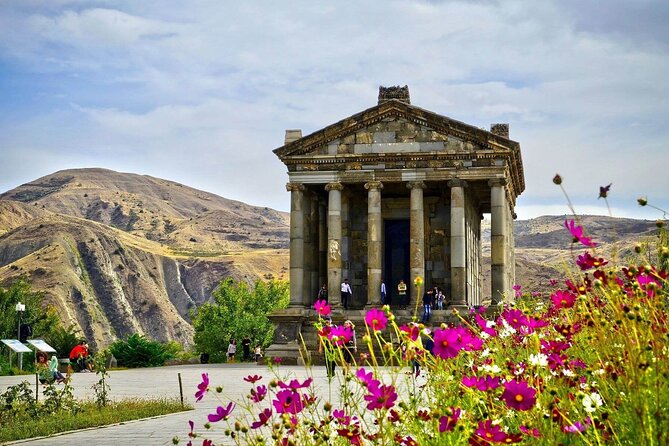
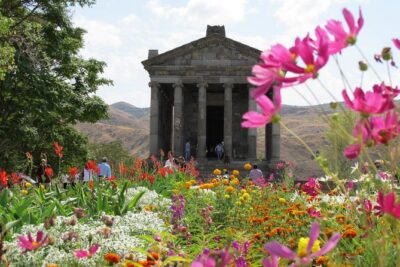
Garni is one of the day’s essential stops. Built in the second half of the first century by King Trdat III, it is the only surviving pagan temple on Armenian territory. Its classical columns look striking against the surrounding hills, and the building feels very different from the Christian monasteries that follow.
The temple is generally linked with Mithra, the sun god. After Christianity became the state religion, Garni was used as a summer residence for Khosrovadukht, the sister of King Trdat III. An earthquake destroyed the temple in 1679, scattering its columns and stones. The structure you see today was rebuilt from surviving pieces.
You have about an hour here. That gives you time to study the columns, walk around the site, and hear how the temple fits into Armenia’s religious history. The admission fee is not included, so bring that cost into your planning.
Garni also makes a good lunch area. A previous itinerary included a well-paced lunch stop near Garni, but lunch itself is not included in the tour price. Ask the operator about timing if you want a proper meal rather than a quick stop.
The nearby Symphony of the Stones is another possible addition, but its entrance fee is also excluded. The tour information does not promise a visit automatically, so confirm whether it fits into your chosen schedule.
Geghard Monastery and its rock-cut chapels
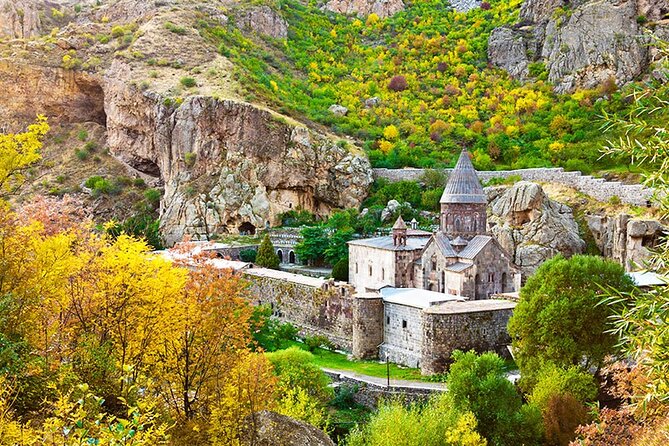
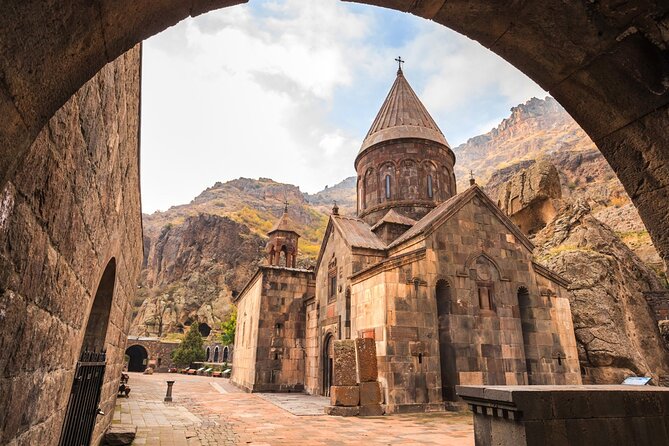
Geghard is often the most atmospheric stop of the day. The monastery was founded in the fourth century beside a sacred spring, and parts of the complex are carved directly into the rock. That gives the site a darker, more enclosed feeling than Garni.
The name Geghard means spear. It refers to the spear said to have pierced the body of Jesus Christ. The relic is now kept in the museum at Echmiadzin, which gives the two sites a direct connection.
You have roughly one hour at Geghard, and that is enough to see the main complex without rushing badly. Look closely at the transition between built stone walls and chambers cut from the cliff. The craftsmanship is impressive, but the setting is just as important. The monastery feels tied to the mountain rather than simply placed beside it.
Admission is listed as free. You should still dress and behave respectfully, since this remains a functioning religious site. The ground and interiors may not suit everyone, particularly if you prefer flat, easy routes, though most participants can take part according to the tour information.
More Echmiadzin and Zvartnots trips from Yerevan
- Group Tour: Echmiadzin Cathedral & churches, Zvartnots Temple
★ 5.0 · 352 reviews - Private Half-day Echmiadzin Cathedral, Hripsime & Zvartnots Temple from Yerevan
★ 5.0 · 95 reviews - Private tour to Echmiadzin (st Cathedral), Zvartnots, Khor Virap, Garni, Geghard
★ 5.0 · 67 reviews - Private 8-9-hour Echmiadzin, Zvartnots, Garni and Geghard trip from Yerevan
★ 5.0 · 62 reviews
Echmiadzin, the center of Armenian Christianity
Echmiadzin, also spelled Etchmiadzin, changes the focus from mountain scenery to Armenian religious life. The cathedral was founded in the fourth century, and its name means place of the descent of the Only Begotten. It is the seat of the Catholicos, the head of the Armenian Apostolic Church.
The cathedral has an unusual feature: along with the main altar at the eastern end, it has another altar in the center, marking the place where Christ is believed to have descended. Even if you are not a religious visitor, that layout helps explain the site’s importance.
The Treasury Museum is the main extra attraction. It holds relics, church clothing decorated with gold and pearls, staffs, crosses, and ceremonial objects made from gold, silver, and ivory. The spear associated with Geghard is kept here. The Treasury requires a separate entrance fee, so decide in advance if you want to include it.
You have about an hour at Echmiadzin. That is a good amount of time for the cathedral and a brief look at the grounds. It may feel short if you want both the cathedral and a careful museum visit. A private tour gives you a better chance of adjusting the stop, but do not assume extra time is guaranteed.
The grounds also include cross-stones, known as khachkars. One noted example is the Amenaprakich cross-stone from 1279. Another honors the victims of the 1915 genocide. These details add weight to the visit, so do not spend the entire hour indoors.
Saint Hripsime Church and Saint Gayane Church
The nearby churches of Saint Hripsime and Saint Gayane give you two more chances to see Armenia’s distinctive church architecture without the crowds or scale of a major cathedral. Each stop is scheduled for about 30 minutes.
Saint Hripsime was founded in the seventh century on the site of the saint’s burial place. It has been part of the UNESCO-listed religious sites of Echmiadzin since 2000. Two Armenian Catholicos are buried in the courtyard, adding another layer to the site’s importance.
Half an hour is enough for a look inside, a walk around the church, and a little time in the courtyard. This is not a stop where you need to linger for hours. Its value comes from seeing the clean, compact form of Armenian church design after the larger experience at Echmiadzin.
Saint Gayane was built in the seventh century on the site of a fourth-century chapel. The relics of Saint Gayane are kept in the southern wall near the altar niche. You can also see preserved seventeenth-century murals above the western entrance, showing the birth of Christ.
The grounds contain a room connected with matah, the Armenian practice of animal sacrifice. The custom may be performed for occasions such as weddings or the birth of a child. That detail gives you a glimpse into religious practice beyond architecture, although the tour does not promise that you will see the rite taking place.
Because both churches receive only 30 minutes, listen carefully if you have a guide. If you travel with the driver only, you may see the buildings but miss some of the meaning behind the sites. This is the clearest case for adding the optional English or Russian-speaking guide.
Zvartnots and the power of ruins
Zvartnots is the final major stop, and it ends the day on a dramatic note. The seventh-century cathedral was built over 20 years and was once a grand, complex structure. A powerful earthquake destroyed it, leaving ruins that still suggest the size and ambition of the original.
The name Zvartnots refers to vigilant or watchful forces. Today, the site functions as an archaeological reserve and museum. You can see large sculptural fragments and reconstruction models that help you imagine the cathedral before its collapse.
The ruins are included on the UNESCO World Heritage list. They are especially useful for visitors who enjoy seeing how archaeologists rebuild a picture from columns, carved stones, and partial walls. The site does not offer the intact interiors you see at Geghard or the active religious setting of Echmiadzin. Its appeal is architectural and archaeological.
You have about an hour here. The entrance fee is extra, so check the total cost before booking. The stop is open and exposed compared with the cave monastery, so practical clothing and water matter. Bottled water is included in the vehicle, which is helpful on a full day of sightseeing.
What the $105 price really gives you
At $105 per group of up to three, the price is strongest when shared by two or three people. For three, that works out to $35 each before entrance fees, lunch, and any optional guide service. For one person, the same price is less of a bargain, though private transport still adds value.
Included are hotel, apartment, or hostel pickup and drop-off, a private air-conditioned vehicle, a professional driver, bottled water, WiFi on board, and private transportation. You do not need to arrange separate taxis between the sites, and you avoid the uncertainty of public transport for a packed route.
The optional guide is an important price decision. One experience on this route was taken with a driver only, and the driver showed the key points while providing a comfortable trip. That can work if you mainly want transport and independent sightseeing.
I would add the English-speaking guide if Armenian religious history is new to you. Garni, Geghard, Echmiadzin, and Zvartnots are much easier to connect when someone explains the shift from pagan worship to Christianity, the role of relics, and the meaning of the churches. A Russian-speaking guide is also available.
The price does not include lunch, Garni’s admission, the Symphony of the Stones, Zvartnots admission, or the Echmiadzin Treasury Museum. These are not small details. Ask for the current entrance costs and decide which extras matter to you before the morning begins.
What the pace and service are like
The tour is advertised at about seven hours, with pickup from your accommodation. That makes it a practical choice if you have limited time in Yerevan and want to cover several major sites in one outing.
The schedule is full but reasonable. The longest stops are Garni, Geghard, Echmiadzin, and Zvartnots, each around one hour. Charents Arch and the two smaller churches are shorter pauses that keep the route moving.
The strongest service details are simple ones: a comfortable car, a good driver, hotel pickup, and WiFi. Arev is named as an especially friendly and informative guide, and David is noted as a very good driver. The overall service is described as organized, helpful, and easy to adjust around your preferences.
You should confirm whether your booking includes a guide or only the driver. The tour allows a guide upgrade, but the base description does not make it automatic. That distinction can shape the quality of your visit at Echmiadzin and the smaller churches.
The tour is offered in English, with Russian available as an optional guide language. Confirmation is provided at booking, and most people can participate. Pickup is available from a hotel, apartment, or hostel, which saves time at the start and end of the day.
Who should book this Armenia tour
I would choose this tour if you want a broad first look at Armenia without renting a car or arranging several separate trips. It suits couples, friends, and small families who value a private vehicle and want to control the pace.
It is also a good fit if you care about both pagan and Christian Armenia. Garni and Geghard provide the strongest contrast, while Echmiadzin and Zvartnots add religious and archaeological depth.
I would be more cautious if you prefer slow travel. Seven hours is enough to see the main points, but not enough to sit for a long time at each church, take an extended meal, and explore every museum carefully. The itinerary works best when you accept that it is a highlights day.
The free cancellation policy gives you some flexibility. You can cancel up to 24 hours before the start time for a full refund. Changes or cancellations made less than 24 hours before departure are not accepted, with cut-off times based on local time.
Should you book it?
Book this tour if you want Armenia’s major heritage sites handled in one private day, especially if two or three people can share the $105 group price. The route is varied, the vehicle and pickup simplify the logistics, and the combination of Garni, Geghard, Echmiadzin, and Zvartnots gives you a useful picture of the country.
Add the guide if you want context rather than just transport. Skip or limit the optional museum visits if you prefer outdoor ruins and churches, but budget for the required entrance fees before you set your total.
This is not the slowest way to see Armenia, and it is not an all-inclusive price. It is a practical, well-packed day for you to cover a lot of ground without sacrificing the privacy of your own small group.
FAQ
How long does the private Armenia tour last?
The tour lasts approximately seven hours.
How many people can take part?
The private tour is priced for a group of up to three people, and only your group participates.
Is hotel pickup included?
Yes. Pickup and drop-off are available from your hotel, apartment, or hostel.
Is a guide included in the base tour?
An English or Russian-speaking guide is available as an optional service. The tour also includes a professional driver, and one experience used the driver without a separate guide.
Are entrance fees included?
No. Entrance fees for Garni Temple, the Symphony of the Stones, Zvartnots, and the Echmiadzin Treasury Museum are not included.
Is lunch included?
No. Lunch is not included, though the schedule allows time for a lunch stop near Garni.
Can I cancel for a full refund?
Yes. You can cancel at least 24 hours before the start time for a full refund. Cancellations or changes made less than 24 hours before the start time are not accepted.
Just added in Yerevan
- Amberd (Saghmosavank,Armenian alphbet monument)★ 5.0 · 5 reviews
- 6 days in Armenia: Garni, Tatev, Echmiadzin, Sanahin, Haghpat★ 5.0 · 12 reviews
- Private Tour to Lake Sevan and Sevanavank Monastery★ 5.0 · 10 reviews
- Group Tour: Garni Temple, Geghard Monastery and Lake Sevan★ 5.0 · 14 reviews
- Dilijan (Haghartsin Monastery),Lake Sevan,Tsakhkadzor(ski resort)★ 5.0 · 13 reviews
- Private day trip to Tatev Monastery and South Armenia★ 5.0 · 8 reviews
- Private tour to Garni Temple, Geghard Monastery (UNESCO) & Symphony of Stones★ 5.0 · 11 reviews
- Private Transfer & Tour from Tbilisi to Yerevan or Yerevan to Tbilisi★ 5.0 · 8 reviews
Garni and Geghard Tours, compared.
Group Tour: Garni, Symphony of Stones, Geghard, Lavash Baking
Read our review →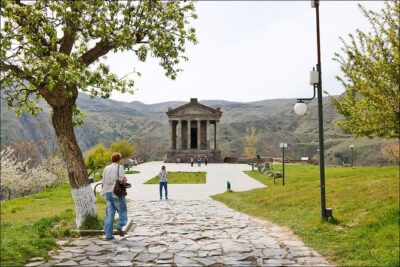
Group Tour: Garni pagan temple, Geghard monastery, Lake Sevan, Sevanavank
Read our review →
Group Tour: Khor Virap, Garni temple, Geghard, Lavash baking
Read our review →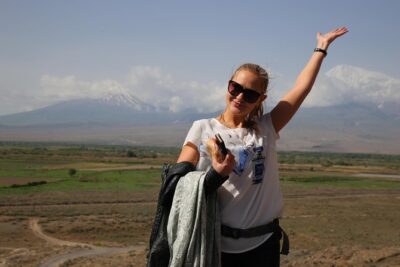
Private 7-8-hour Khor Virap, Garni temple & Geghard monastery trip from Yerevan
Read our review →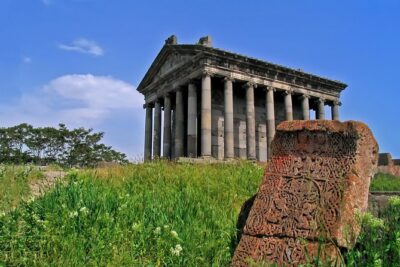
Garni, Geghard & Symphony Small-Group Day Trip with Lavash Baking
Read our review →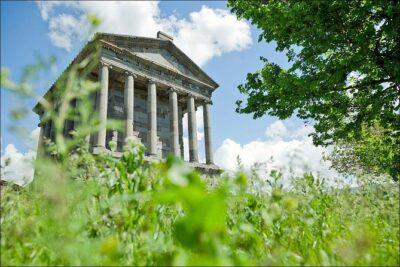
Private Half-Day Garni Temple and Geghard Monastery Tour from Yerevan
Read our review →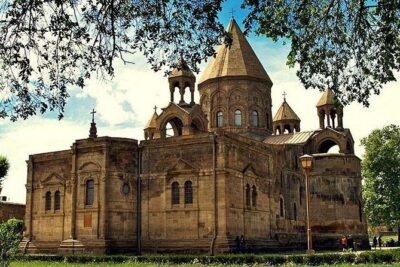
Private tour to Echmiadzin (st Cathedral), Zvartnots, Khor Virap, Garni, Geghard
Read our review →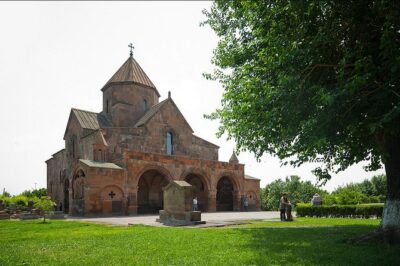
Private 8-9-hour Echmiadzin, Zvartnots, Garni and Geghard trip from Yerevan
Read our review →Browse the lists this tour appears in